Treasures from Our Pastكنوز من ماضيناعدد الأسئلة : 58
Kuwaiti people _________ hard for their country.
الشعب الكويتي ____ بشدة من أجل وطنه.- fought
- recited
- honoured
- taught
We should live in _________ with everyone.
يجب أن نعيش في ____ مع الجميع.- centre
- symbol
- peace
- spices
_________ is a group of people living together.
____ هو مجموعة من الناس يعيشون معًا.- Ruins
- Bravery
- Battle
- Society
We should _________ our beautiful country.
يجب أن ____ وطننا الجميل.- protect
- teach
- recite
- fight
If you visit Failaka Island, you can see ancient _________.
إذا زرت جزيرة فيلكا، يمكنك أن ترى ____ قديمة.- education
- ruins
- pride
- courage
The soldiers showed great _________ in battle.
أظهر الجنود ____ عظيمة في المعركة.- heritage
- guest
- courage
- temple
My father _________ the Quran every day. His voice is beautiful.
أبي ____ القرآن كل يوم. صوته جميل.- fights
- protects
- teaches
- recites
Souq Al-Mubarakiya is in the _________ of Kuwait City.
سوق المباركية في ____ مدينة الكويت.- education
- battle
- centre
- Greek
Kuwait’s flag is a/an _________ of our unity and pride.
علم الكويت ____ لوحدتنا وفخرنا.- care
- symbol
- education
- guest
My mother uses _________ to make food tastier.
تستخدم أمي ____ لتجعل الطعام ألذ.- spices
- heritage
- ruins
- bravery
Animals always _________ their children.
الحيوانات دائمًا ____ صغارها.- fight
- protect
- recite
- honour
_________ helps children learn new things.
____ يساعد الأطفال على تعلّم أشياء جديدة.- Symbol
- Education
- Peace
- Spices
She felt _________ after winning the race.
شعرت بـ____ بعد فوزها في السباق.- centre
- education
- ruins
- pride
They welcomed the _________ warmly at dinner.
رحّبوا بـ____ بحرارة على العشاء.- guest
- care
- bravery
- battle
What is the best title for the passage?
ما هو العنوان الأفضل للنص؟- Touristic Landmarks
- New Kuwait
- Buying and Selling
- Houses
The underlined word ”it” in line 6 refers to
الكلمة التي تحتها خط ”it” في السطر 6 ترجع على- the sea
- Kuwait City
- gold
- Kushk Mubarak
The underlined word protect in line 12 means
الكلمة التي تحتها خط protect في السطر 12 تعني- sell
- eat
- save
- buy
What did people buy from Souq Al-Mubarakiya?
ماذا اشترى الناس من سوق المباركية؟- People bought everything from there like food, spices, clothes, and gold.
- People bought cars and planes from there.
- People bought only books from there.
- People bought nothing from there.
Where are sick children given care and love?
أين يُعطى الأولاد المرضى الرعاية والحب؟- In Bayt Abdullah.
- In the Red Palace.
- In Souq Al-Mubarakiya.
- In Kushk Mubarak.
What is the best title for the passage?
ما هو العنوان الأفضل للنص؟- A trip to Old Kuwait
- The First School in Kuwait
- A Great Kuwaiti Teacher
- Modern Schools
The underlined word They in line 3 refers to
الكلمة التي تحتها خط They في السطر 3 ترجع على- teachers
- schools
- children
- people
The opposite of the underlined word small in line 6
ضد الكلمة التي تحتها خط small في السطر 6- old
- big
- new
- short
People needed teachers to teach their children how to
احتاج الناس المعلمين لكي يعلّموا أبناءهم كيف- read and write
- draw
- sing
- paint
What did Mutawa Halima teach children?
ماذا كانت المطوعة حليمة تعلّم الأولاد؟- She taught children the Quran.
- She taught children how to swim.
- She taught children how to cook.
- She taught children football.
How did Kuwait honour Mutawa Halima?
كيف كرّمت الكويت المطوعة حليمة؟- A school in Kuwait is named after her.
- They built a palace for her.
- They gave her a car.
- They made a film about her in London.
She _________ a story a month ago.
هي ____ قصة قبل شهر.- writes
- wrote
- writing
We _________ a movie one week ago.
نحن ____ فيلمًا قبل أسبوع.- watched
- watching
- watch
I _________ to London two weeks ago.
أنا ____ إلى لندن قبل أسبوعين.- travel
- travelling
- travelled
My mother _________ to the cinema three days ago.
أمي ____ إلى السينما قبل ثلاثة أيام.- go
- went
- going
They _________ the school’s event last week.
هم ____ فعالية المدرسة الأسبوع الماضي.- organise
- organising
- organised
Last week, I _________ my grandmother’s house
الأسبوع الماضي، أنا ____ بيت جدتي- visited
- visit
- visiting
She _________ her house yesterday.
هي ____ بيتها أمس.- decorate
- decorating
- decorated
My mother _________ delicious food a week ago.
أمي ____ طعامًا لذيذًا قبل أسبوع.- cook
- cooks
- cooked
We _________ a big dinner last night.
نحن ____ عشاءً كبيرًا الليلة الماضية.- eat
- ate
- eating
My cousins _________ to play yesterday.
أبناء عمي ____ ليلعبوا أمس.- came
- come
- coming
They _________ a music concert last Thursday.
هم ____ حفلًا موسيقيًا يوم الخميس الماضي.- attend
- attends
- attended
What _________ you do four days ago?
ماذا ____ فعلت قبل أربعة أيام؟- do
- does
- did
They haven’t _________ to Al-Mubarakiya before.
هم لم ____ إلى المباركية من قبل.- go
- went
- gone
She _________ visited the ancient ruins many times.
هي ____ زارت الآثار القديمة مرات كثيرة.- has
- have
- having
_________ you been to Failaka Island?
____ ذهبت إلى جزيرة فيلكا؟- Has
- Have
- Do
My father has _________ his coffee this morning.
أبي ____ قهوته هذا الصباح.- drink
- drinking
- drunk
The girls _________ written their homework.
البنات ____ كتبن واجبهن.- have
- has
- having
_________ your sister ever seen an elephant?
هل ____ أختك فيلًا من قبل؟- Have
- Does
- Has
I haven’t _________ a sandcastle.
أنا لم ____ قلعة رملية.- build
- building
- built
We have _________ to the shop.
نحن ____ إلى المتجر.- be
- been
- being
Have they _________ dinner?
هل ____ العشاء؟- cook
- cooks
- cooked
The pilot has _________ the plane many times.
الطيار ____ الطائرة مرات كثيرة.- fly
- flown
- flying
My brother has _________ Dubai many times.
أخي ____ دبي مرات كثيرة.- visit
- visits
- visited
The students have _________ their exam.
الطلاب ____ امتحانهم.- answered
- answers
- answering
Hamad _________ football every Monday.
حمد ____ كرة القدم كل يوم اثنين.- play
- plays
- playing
We _________ our grandparents every Friday.
نحن ____ أجدادنا كل يوم جمعة.- visit
- visits
- visiting
My mother always _________ delicious food for us.
أمي دائمًا ____ طعامًا لذيذًا لنا.- cook
- cooking
- cooks
They _________ to school by bus every day.
هم ____ إلى المدرسة بالباص كل يوم.- goes
- go
- going
I always _________ my teeth before I sleep.
أنا دائمًا ____ أسناني قبل أن أنام.- brush
- brushes
- brushed
Dolphins usually _________ water.
الدلافين عادةً ____ الماء.- splashes
- splash
- splashed
Ali _________ eat an apple every day.
علي ____ يأكل تفاحة كل يوم.- didn’t
- don’t
- doesn’t
Monkeys _________ trees every day.
القرود ____ الأشجار كل يوم.- climb
- climbs
- climbed
He always _________ TV after school.
هو دائمًا ____ التلفاز بعد المدرسة.- watch
- watched
- watches
From Our Heritage to Our Futureمن تراثنا إلى مستقبلناعدد الأسئلة : 54
She wants to buy a gold _________ at the souq.
تريد أن تشتري ____ ذهبية من السوق.- market
- necklace
- village
- mud
I want to buy a / an _________ for grandma.
أريد أن أشتري ____ لجدتي.- activity
- artist
- village
- thoub
The Avenues is always _________ at the weekends.
الأفنيوز دائمًا ____ في عطلات نهاية الأسبوع.- busy
- sure
- happy
- joyful
Grandma showed me her beautiful _________ made of wool.
أرتني جدتي ____ الجميل المصنوع من الصوف.- library
- information
- weaving
- artist
It is kind to _________ your toys with your friends.
من اللطف أن ____ ألعابك مع أصدقائك.- knock
- share
- remember
- knit
My teacher was very _________ helping all the students.
كانت معلمتي ____ جدًا في مساعدة كل الطلاب.- busy
- sure
- bright
Houses were made of _________ in the past.
كانت البيوت مصنوعة من ____ في الماضي.- village
- activity
- necklace
- mud
Children learned in _________ in old Kuwait.
تعلّم الأطفال في ____ في الكويت القديمة.- thoub
- Al-Katateeb
- artist
- information
Kuwait has a great past and a _________ future.
للكويت ماضٍ عظيم ومستقبل ____.- bright
- sure
- busy
Hussein and his father _________ a trip to Kuwait.
حسين ووالده ____ لرحلة إلى الكويت.- knock
- train
- share
- plan
You should _________ on the door before you come in.
يجب أن ____ على الباب قبل أن تدخل.- knit
- remember
- knock
- plan
We have many fun _________ in the sports club.
لدينا الكثير من ____ الممتعة في النادي الرياضي.- libraries
- activities
- villages
- artists
This book gives _________ about zoo animals.
هذا الكتاب يعطي ____ عن حيوانات حديقة الحيوان.- information
- mud
- market
- weaving
She likes to _________ sweaters.
هي تحب أن ____ الكنزات الصوفية.- knock
- train
- knit
- plan
What is the best title for the passage?
ما هو العنوان الأفضل للنص؟- Important Traditions
- Al-Sadu House
- Sharing Information
- Teaching Weaving
The underlined word ”they” in line 7 refers to
الكلمة التي تحتها خط ”they” في السطر 7 ترجع على- tourists
- traditions
- artists
- people
The opposite of the word hard in line 4 is
ضد الكلمة التي تحتها خط hard في السطر 4 هو- actual
- quick
- slow
- easy
When was Al-Sadu House built?
متى تم بناء بيت السدو؟- It was built in 1936.
- It was built in 1953.
- It was built in 2020.
- It was built in 1800.
What do people learn in Al-Sadu House?
ماذا يتعلم الناس في بيت السدو؟- They learn about weaving and to save this heritage.
- They learn how to fly planes.
- They learn how to cook machboos.
- They learn how to play football.
The best title for the passage could be
العنوان الأفضل للنص هو- A Visit to Alblajat
- A Trip to Kuwait
- Shopping in the Avenues
- A Visit to “Youm Al-Bahhar”
The underlined word ”it” in line 5 refers to
الكلمة التي تحتها خط ”it” في السطر 5 ترجع على- laban
- chicken
- JACC
- machboos
The opposite of the word traditional in line 3 is
ضد الكلمة التي تحتها خط traditional في السطر 3 هو- old
- young
- modern
- fun
What can people enjoy in Sheikh Jaber Al-Ahmed Cultural Centre?
بماذا يستطيع الناس الاستمتاع في مركز الشيخ جابر الأحمد الثقافي؟- People can enjoy music, movies, and fun activities.
- People can enjoy swimming in the sea.
- People can enjoy buying gold.
- People can enjoy fishing.
Why is Hussain going to go to the new beach?
لماذا سيذهب حسين إلى الشاطئ الجديد؟- To watch the sunset.
- To buy clothes.
- To eat machboos.
- To see the mud houses.
He can’t see _________ because the room is dark.
لا يستطيع أن يرى ____ لأن الغرفة مظلمة.- something
- anything
- everything
My aunt needs to buy _________ from the market.
عمتي تحتاج أن تشتري ____ من السوق.- something
- anything
- everything
She needs to find _________ to wear for the party.
هي تحتاج أن تجد ____ لترتديه في الحفلة.- something
- anything
- everything
Do you need _________ for dinner?
هل تحتاج ____ للعشاء؟- something
- anything
- everything
Have you got _________ blue to wear?
هل لديك ____ أزرق لترتديه؟- something
- anything
- everything
I need _________ to eat. I’m so hungry.
أحتاج ____ لآكله. أنا جائع جدًا.- something
- anything
- everything
They won’t buy _________ from the market.
لن يشتروا ____ من السوق.- something
- anything
- everything
The student wrote _________ on the board.
كتب الطالب ____ على السبورة.- something
- anything
- everything
My teacher doesn’t say _________ to us.
معلمي لا يقول ____ لنا.- something
- anything
- everything
Noura wants to go to the bakery _________ the library.
نورة تريد أن تذهب إلى المخبز ____ المكتبة.- and
- but
I took my umbrella, _________ it didn’t rain.
أخذت مظلتي، ____ لم تمطر.- and
- but
- or
I went to the park _________ the bakery.
ذهبت إلى الحديقة ____ المخبز.- and
- but
- or
The horse is fast _________ tall.
الحصان سريع ____ طويل.- and
- but
- or
She is tall, _________ she didn’t score a goal.
هي طويلة، ____ لم تسجل هدفًا.- and
- but
- or
Mum is a good chef, _________ she is not feeling well.
أمي طاهية ماهرة، ____ لا تشعر أنها بخير.- and
- but
- or
The whale is big _________ blue.
الحوت كبير ____ أزرق.- and
- but
- or
He finished all his work, _________ he can’t rest.
أنهى كل عمله، ____ لا يستطيع أن يرتاح.- and
- but
- or
The man is walking _________ the street.
الرجل يمشي ____ الشارع.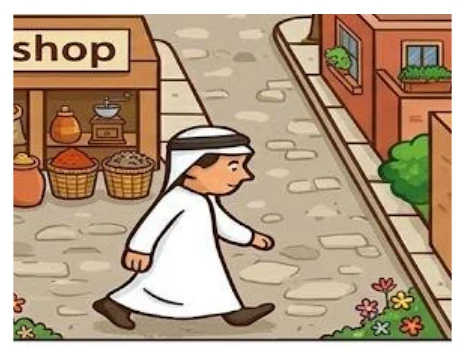
- on
- behind
- in front of
The gold shop is _________ the spice shop.
محل الذهب ____ محل التوابل.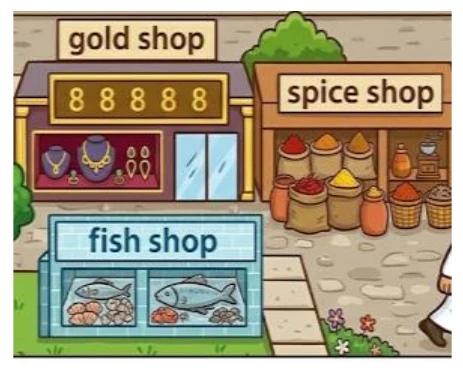
- on
- behind
- next to
The bank is _________ the gold shop.
البنك ____ محل الذهب.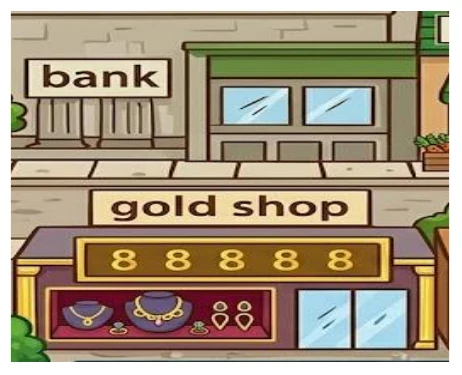
- next to
- in front of
- behind
The park is _________ the vegetable shop.
الحديقة ____ محل الخضار.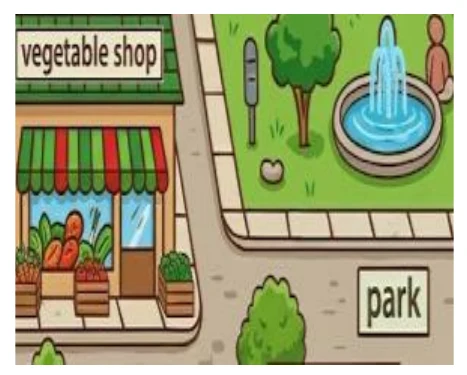
- near
- on
- behind
The fish shop is _________ the gold shop.
محل السمك ____ محل الذهب.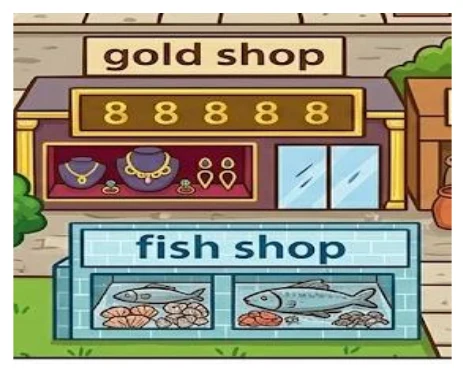
- on
- in front of
- behind
Ali is going to _________ judo this afternoon.
علي سوف ____ الجودو بعد ظهر اليوم.- do
- does
- doing
They _________ going to play table tennis tomorrow.
هم ____ سيلعبون تنس الطاولة غدًا.- am
- is
- are
I am going to _________ a story this evening.
أنا سوف ____ قصة هذا المساء.- read
- reading
- reads
Dana _________ going to swim in the pool next week.
دانة ____ ستسبح في المسبح الأسبوع القادم.- are
- is
- am
We are going to _________ a cake with mom this afternoon.
نحن سوف ____ كعكة مع أمي بعد ظهر اليوم.- bake
- bakes
- baked
The children _________ going to play football tomorrow.
الأطفال ____ سيلعبون كرة القدم غدًا.- are
- is
- am
I _________ going to sleep early tonight.
أنا ____ سأنام مبكرًا الليلة.- is
- am
- are
She is _________ visit her grandparents next Friday.
هي ____ تزور أجدادها يوم الجمعة القادم.- go to
- going to
- will
Exploring the Weatherاستكشاف الطقسعدد الأسئلة : 38
I always check the weather _________ before I go out.
أنا دائمًا أتحقق من ____ الطقس قبل أن أخرج.- sunscreen
- forecast
- sailor
- fishing rod
The sky will be _________ in the afternoon.
ستكون السماء ____ بعد الظهر.- careful
- slippery
- soft
- clear
It might be _________ today. We should stay indoors.
قد يكون الجو ____ اليوم. يجب أن نبقى في الداخل.- humid
- soft
- careful
- clear
We finished _________ our bags and we were leaving after lunch.
انتهينا من ____ حقائبنا وكنا سنغادر بعد الغداء.- type
- humidity
- packing
- application
It is dusty. There was a _________ and it lasted for an hour.
الجو مغبر. كانت هناك ____ واستمرت لمدة ساعة.- sunscreen
- dust storm
- satellite
- sailor
She shouldn’t forget to wear _________ on a sunny day.
يجب ألا تنسى أن تضع ____ في يوم مشمس.- sunscreen
- forecast
- application
- fishing rod
_________! We‘ll be late for school.
____! سنتأخر عن المدرسة.- Provide
- Manage
- Fall
- Hurry up
He bought a new _________ to use it for fishing.
اشترى ____ جديدة ليستخدمها في الصيد.- satellite
- fishing rod
- dust storm
- humidity
He has to _________ his money well.
يجب عليه أن ____ أمواله جيدًا.- manage
- affect
- hurry up
- fall
Be _________ when you carry the baby.
كن ____ عندما تحمل الطفل الرضيع.- slippery
- dusty
- humid
- careful
You have to _________ slowly when you exercise.
يجب عليك أن ____ ببطء عندما تمارس الرياضة.- affect
- provide
- breathe
- manage
It’s raining. You should take your _________ with you.
إنها تمطر. يجب أن تأخذ ____ معك.- dust storm
- raincoat
- satellite
- type
My father is a _________. He works on a ship.
أبي ____. هو يعمل على سفينة.- sailor
- sunscreen
- packing
- raincoat
Drive carefully. The road is _________.
قد بحذر. الطريق ____.- soft
- careful
- slippery
The best title for the passage could be
العنوان الأفضل للنص هو- The Weather Report
- The Weather Tools
- The Meteorological Department
The meaning of the underlined word ”built” in line 5 is
معنى الكلمة التي تحتها خط ”built” في السطر 5 هو- made
- gave
- studied
- helped
The underlined word “it” in line 7 refers to
الكلمة التي تحتها خط it في السطر 7 ترجع على- the weather
- day
- night
- The department
How many stations does the Meteorological Department have?
كم عدد المحطات لدى قسم الأرصاد الجوية الكويتي؟- 27 stations.
- 53 stations.
- 7 stations.
- 100 stations.
Why do sailors, pilots and farmers need this information?
لماذا يحتاج البحارة والطيارون والمزارعون هذه المعلومات؟- To help them manage their work.
- To help them buy new cars.
- To help them cook food.
- To help them play games.
The best title for the passage could be
العنوان الأفضل للنص هو- The Hot places
- The Life of Plants
- The Rainy Days
- Different Types of Weather
The underlined word “it” in line 8 refers to
الكلمة التي تحتها خط it في السطر 8 ترجع على- weather
- snow
- world
- water
The opposite of the underlined word ”light” in line 4 is
ضد الكلمة التي تحتها خط ”light” في السطر 4 هو- warm
- heavy
- hot
- cold
What do people use when it rains a lot?
ماذا يستخدم الناس عندما تمطر كثيرًا؟- People use umbrellas and raincoats.
- People use sunscreen.
- People use fishing rods.
- People use dust masks.
Why must people be careful when there is snow?
لماذا يجب على الناس أن يكونوا حذرين عندما يكون هناك ثلج؟- Because snow makes roads slippery.
- Because snow makes plants grow.
- Because snow is very hot.
- Because snow makes people hungry.
I was tired, _________ I went to bed.
كنت متعبًا، ____ ذهبت إلى السرير.- or
- but
- so
Do you want tea _________ juice?
هل تريد شايًا ____ عصيرًا؟- or
- but
- so
It was raining, _________ we stayed home.
كانت تمطر، ____ بقينا في البيت.- or
- but
- so
My room is very messy, _________ I cleaned it up.
غرفتي فوضوية جدًا، ____ نظفتها.- or
- but
- so
We can go to the park _________ the sea.
يمكننا أن نذهب إلى الحديقة ____ البحر.- or
- but
- so
We can have a picnic in the park, _________ we can go to the beach.
يمكننا أن نقوم بنزهة في الحديقة، ____ يمكننا أن نذهب إلى الشاطئ.- or
- but
- so
You have to _________ indoors in dusty weather.
يجب عليك أن ____ في الداخل في الطقس المغبر.- staying
- stay
- stayed
The weather is cloudy. It might _________ today.
الطقس غائم. قد ____ اليوم.- rain
- raining
- rained
You should _________ carefully on a slippery road.
يجب أن ____ بحذر على الطريق الزلق.- driving
- drive
- drives
You have to _________ sunscreen to protect yourself from the sun.
يجب عليك أن ____ واقي الشمس لتحمي نفسك من الشمس.- wear
- wearing
- wears
It’s dusty outside. There might _________ a dust storm today.
الجو مغبر في الخارج. قد ____ عاصفة ترابية اليوم.- be
- being
- been
The weather is cold. You have to _________ indoors.
الطقس بارد. يجب عليك أن ____ في الداخل.- staying
- stayed
- stay
The sky is clear. We might _________ camping.
السماء صافية. قد ____ للتخييم.- goes
- go
- going
It’s raining. You should _________ your umbrella with you.
إنها تمطر. يجب أن ____ مظلتك معك.- take
- taking
- takes
Read to Exploreاقرأ لتستكشفعدد الأسئلة : 39
The _________ of this story wrote many exciting books.
____ هذه القصة كتب كتبًا مثيرة كثيرة.- kindness
- author
- traveller
- expression
You can use the _________ to find the meaning of the new words.
يمكنك استخدام ____ لتجد معنى الكلمات الجديدة.- cough
- booth
- adventure
- dictionary
I didn’t _________ the question, it is not clear enough.
لم ____ السؤال، فهو ليس واضحًا بما فيه الكفاية.- understand
- join
- cover
- discuss
I was _________ when my cousins came to visit me!
كنت ____ عندما جاء أبناء عمي لزيارتي!- scary
- surprised
- curious
Yesterday, Hamad went to Mishref _________. He bought some books.
أمس، ذهب حمد إلى ____ مشرف. اشترى بعض الكتب.- traveller
- book fair
- reader
- kindness
_________ can help you in writing good stories.
____ يمكن أن يساعدك في كتابة قصص جيدة.- Imagination
- Booth
- Cover
- Cough
Fahad bought a book about _________ stories.
اشترى فهد كتابًا عن قصص ____.- dictionary
- page
- cough
- adventure
I want to _________ the summer reading club.
أريد أن ____ إلى نادي القراءة الصيفي.- cover
- join
- cough
- discuss
She feels _________ when she meets new people.
هي تشعر بـ____ عندما تقابل أناسًا جددًا.- shy
- tough
You shouldn’t watch _________ movies. They give you bad dreams.
يجب ألا تشاهد الأفلام ____. إنها تسبب لك أحلامًا سيئة.- calm
- curious
- surprised
- scary
I always _________ my problems with my parents.
أنا دائمًا ____ مشاكلي مع والديّ.- cough
- cover
- discuss
- join
We should show our _________ to people.
يجب أن نُظهر ____ للناس.- traveller
- kindness
- book fair
- reader
Please, talk _________ so everyone can understand you.
من فضلك، تكلّم ____ حتى يفهمك الجميع.- clearly
- too
- enough
Good readers are _________. They always ask questions.
القرّاء الجيدون ____. هم دائمًا يسألون الأسئلة.- calm
- shy
- curious
- glad
The best title for the passage could be
العنوان الأفضل للنص هو- Reading Stories
- Treasures of Reading
- A Visit to a Library
- Learning is Fun
The underlined word “it” in line 10 refers to
الكلمة التي تحتها خط it في السطر 10 ترجع على- reading
- book
- day
- life
The meaning of the underlined word ”useful” in line 4 is
معنى الكلمة التي تحتها خط ”useful” في السطر 4 هو- easy
- bad
- good
- hard
What can you do every day to become a good reader?
ماذا تستطيع أن تفعل كل يوم لتصبح قارئًا جيدًا؟- I take time every day to read for few minutes.
- I watch TV all day.
- I sleep all day.
- I play video games all day.
How do good readers speak?
كيف يتكلم القرّاء الجيدون؟- Good readers speak fluently with expressions
- Good readers never speak.
- Good readers speak angrily.
- Good readers speak without any expressions.
The best title for the passage could be
العنوان الأفضل للنص هو- The Magic Apple
- The Small Village
- The Healthy Basket
- The Kind Girl
The underlined word “it” in line 4 refers to
الكلمة التي تحتها خط it في السطر 4 ترجع على- village
- apple
- food
- door
The opposite of the underlined word ”kind” in line 4 is
ضد الكلمة التي تحتها خط ”kind” في السطر 4 هو- sad
- tall
- bad
- old
Where did Sara live?
أين كانت تعيش سارة؟- Sara lived in a small village with her grandmother.
- Sara lived in a big city with her father.
- Sara lived on a ship.
- Sara lived in a palace.
What did the man leave?
ماذا ترك الرجل؟- He left a basket full of shiny apples, bread, and honey.
- He left a car.
- He left nothing.
- He left a box of toys.
The shirt is _________ small. I can’t wear it.
القميص صغير ____. لا أستطيع ارتداءه.- enough
- too
The coffee is _________ hot. She can’t drink it.
القهوة ساخنة ____. لا تستطيع شربها.- too
- enough
My sister isn’t old _________ to travel alone.
أختي ليست كبيرة ____ لتسافر وحدها.- too
- enough
- so
The box is _________ heavy. I need help to carry it.
الصندوق ثقيل ____. أحتاج مساعدة لحمله.- enough
- too
He isn’t strong _________ to carry that box.
هو ليس قويًا ____ ليحمل ذلك الصندوق.- enough
- too
- so
This car is _________ expensive. She can’t buy it.
هذه السيارة غالية ____. لا تستطيع شراءها.- too
- enough
I would like to _________ chicken for lunch.
أود أن ____ دجاجًا على الغداء.- eats
- eating
- eat
They wouldn’t like to _________ to the cinema today.
هم لا يودّون أن ____ إلى السينما اليوم.- go
- went
- goes
Ali would like to _________ a new iPhone.
علي يود أن ____ آيفون جديدًا.- buys
- buy
- buying
She wouldn’t like to _________ a scary book
هي لا تود أن ____ كتابًا مخيفًا- reading
- reads
- read
My Mother would like to _________ my grandparents.
أمي تود أن ____ أجدادي.- visit
- visiting
- visited
They would like to _________ their bikes in the park.
هم يودّون أن ____ دراجاتهم في الحديقة.- ride
- riding
- rides
Every day I do these things. _________, I wake up. Next, I brush my teeth.
كل يوم أفعل هذه الأشياء. ____، أستيقظ. ثانيًا، أنظف أسناني.- After that
- Finally
- First
First, look at the front cover. _________, read the title.
أولًا، انظر إلى الغلاف الأمامي. ____، اقرأ العنوان.- Next
- First
- Finally
After that, she went to the park. _________, she went back home.
بعد ذلك، ذهبت إلى الحديقة. ____، عادت إلى البيت.- First
- Next
- Finally